 Delta Plumbers
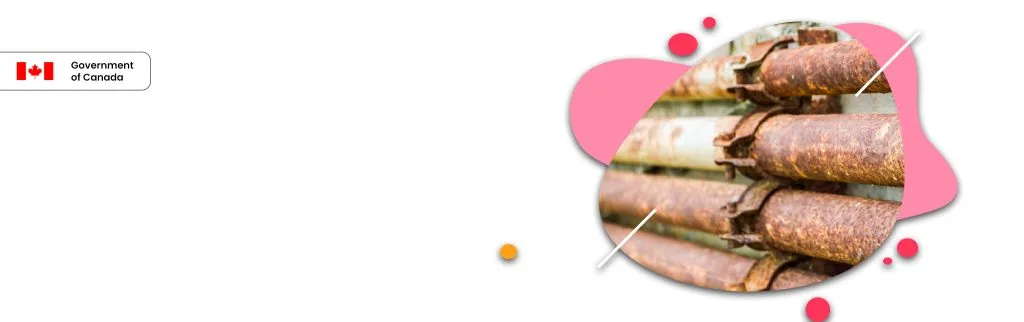
Old houses have character: solid wood doors, cast-iron radiators, quirky nooks. But they can also hide less charming surprises behind the walls—like lead service lines or polybutylene supply pipes. Both materials were once considered modern. Today, they’re red flags. Lead can contaminate drinking water. Polybutylene is notorious for sudden failures that cause costly floods. If your home was built or renovated before the late 1990s, it’s worth understanding what may be lurking in your plumbing and what to do about it.

Picture Source – Delta Plumbers
1) Why Old Plumbing Materials Still Matter Today
Plumbing is easy to ignore when everything works. Water arrives on demand; waste disappears without a second thought. The trouble with legacy materials like lead and polybutylene is that problems often develop out of sight, slowly and silently—until one day they’re not silent anymore.
Lead pipes don’t suddenly shatter. They corrode. Over time, tiny amounts of lead can dissolve into the water you drink and cook with. This isn’t a taste or smell issue; you won’t notice it in a glass. The risk builds quietly, and its effects—especially for infants and children—are serious. That’s why many municipalities have pushed to remove lead service lines. But replacement programs take years, and many private-side lines remain.
Polybutylene, on the other hand, is a reliability problem. The material reacts poorly with typical disinfectants in municipal water. As the pipe ages, it can become brittle. Fittings can crack. A hairline split you can’t see can become a pressurized leak that soaks drywall, flooring, and electrical. Because these pipes often run through finished spaces, a small failure can escalate to a large insurance claim very quickly.
In short: even if your plumbing seems fine, outdated pipe materials can pose health, safety, and financial risks that are worth addressing now—on your schedule—rather than during a 2 a.m. emergency.
Also Read: How to Install a New Outdoor Hose Bib or Faucet

Picture Source – Delta Plumbers
2) What Exactly Are Lead and Polybutylene Pipes?
Lead pipes
Lead is a soft, silvery metal that was used in plumbing for centuries because it’s easy to shape and resistant to pinhole leaks. You’ll see lead in two main ways in older homes:
- Service lines: The pipe that connects your house to the municipal water main. In many older neighbourhoods, the street side may have been replaced, but the private side (from property line to your shutoff) could still be lead.
- Interior plumbing and solder: In very old houses, short interior runs may be lead. In houses with copper pipes installed before more recent reforms, the joints may be joined with solder that contained lead.
Polybutylene (often abbreviated PB)
Polybutylene is a flexible plastic resin used widely from the late 1970s through the mid-1990s. It was marketed as a low-cost, easy-to-install alternative to copper. Some quick identifiers:
- Colour and markings: PB lines are commonly gray indoors, sometimes blue (cold) or black (outdoors). Look for stamped codes like “PB2110.”
- Connections: Often crimped with aluminum or copper rings. You might see plastic or metal insert fittings at junctions.
- Locations: Interior hot and cold distribution lines to bathrooms, kitchens, and laundry rooms; sometimes between the water heater and fixtures.
If your home falls within those vintage windows, it’s worth checking. Renovations sometimes left legacy materials hidden behind new drywall and tile.
Also Read: How to Clear a Clogged Bathtub Drain: The Complete Guide for Homeowners in Ontario

Picture Source – Delta Plumbers
3) The Real-World Risks: Health, Safety, and Hidden Costs
Lead: a health hazard, not a cosmetic problem
Lead in drinking water is particularly dangerous for babies, children, and pregnant people. It can affect brain development, behaviour, and learning. Adults aren’t immune; chronic exposure has been linked to blood pressure and kidney issues. The twist is that water can test “fine” one day and not the next, depending on flow, temperature, and stagnation time. Corrosion control at water treatment plants helps, but it can’t make a lead pipe safe indefinitely—especially when plumbing is disturbed during construction or when water chemistry changes.
Polybutylene: sudden failures and water damage
Polybutylene’s issue is mechanical. Over years of contact with disinfectants, the pipe walls and fittings can embrittle. Failures often occur at elbows, fittings, or areas under constant stress (tight bends, near water heaters). These failures don’t politely announce themselves. Homeowners commonly discover a damp patch on drywall or feel a soft spot in flooring—only to learn a slow leak has been running for weeks. In other cases, a supply line bursts and floods a room within minutes.
The layered costs
Beyond health and repair bills, legacy materials can affect:
- Insurance: Some insurers surcharge or flat-out decline coverage for homes with active polybutylene. Others require replacement as a condition for issuing or renewing policies.
- Resale: Home inspectors flag both materials. Buyers may request credits or require replacement before closing.
- Renovations: If you’re opening walls for a bathroom remodel, leaving lead or PB in place is a missed opportunity. Doing it once—properly—saves future headaches.
Also Read: How to Reduce Water Waste with Simple Plumbing Tweaks

Picture Source – Delta Plumbers
4) How to Tell if You Have Lead or Polybutylene (Without Tearing Down Walls)
Safety first: If you suspect lead, do not sand, grind, or otherwise abrade the pipe. Lead dust is hazardous. Visual checks and simple tests are enough for a first pass.
Lead identification checklist
- Main shutoff location: Go to your basement or utility room where the water line enters the house. Lead service lines are typically a dull gray. If you lightly scratch an inconspicuous area with a coin or key, lead reveals a shiny, silver-metallic surface. Copper will show copper colour; galvanized steel looks dull and magnetic.
- Weight and flexibility: Lead feels softer and slightly pliable. Bends are gentle curves rather than sharp elbows.
- Transitions: You may see a short lead section spliced to copper or plastic with a coupling near the foundation wall.
Polybutylene identification checklist
- Look under sinks and at the water heater: Follow exposed lines. PB is flexible with a matte finish. PEX (the modern flexible pipe) is often red/blue/white and typically uses different fittings.
- Markings: Scan for “PB” and numeric codes like PB2110 printed on the pipe.
- Fittings: PB commonly uses compression or crimp-style rings with insert fittings; you might see past repairs where a section of PB meets copper with a transition coupling.
Not sure? Get a pro inspection.
A licensed plumber can confirm materials, check for mixed systems (e.g., copper inside, lead service outside), and evaluate risk hot-spots like water heater connections, tight bends, and hidden manifolds. If lead is suspected in drinking water, a simple sampling kit can provide lab results and a plan.
Also Read: When to DIY and When to Call a Professional Plumber

Picture Source – Delta Plumbers
5) Codes, Liability, Insurance, and Resale: The Non-Technical Reasons to Act
Beyond the physical risks, there are practical reasons homeowners replace lead and polybutylene.
- Building codes and best practices: New installations of lead are prohibited, and modern codes do not recognize polybutylene as an acceptable material for potable water distribution. If you renovate, your permits will require compliant pipe for any new or altered sections.
- Insurance: Underwriters price in risk. It’s not unusual for policies to include exclusions, higher deductibles, or higher premiums when legacy materials remain. If a PB line bursts, adjusters will look closely at what failed and why.
- Disclosure and resale: Sellers typically must disclose known material defects. Even if you’re not planning to sell soon, an eventual buyer’s inspector will look for these materials. Replacing them proactively removes an obstacle—and often pays back during negotiations.
- Peace of mind: Knowing your water is running through safe, reliable lines is one of those invisible upgrades that reduces daily anxiety.
Also Read: Top 5 Signs It’s Time to Replace Your Kitchen Faucet
Picture Source – Delta Plumbers
6) Replacement Options: What to Use, How the Work Happens, and What to Expect
When you’re ready to act, you’ll face two big decisions: material choice and scope.
Material choices today
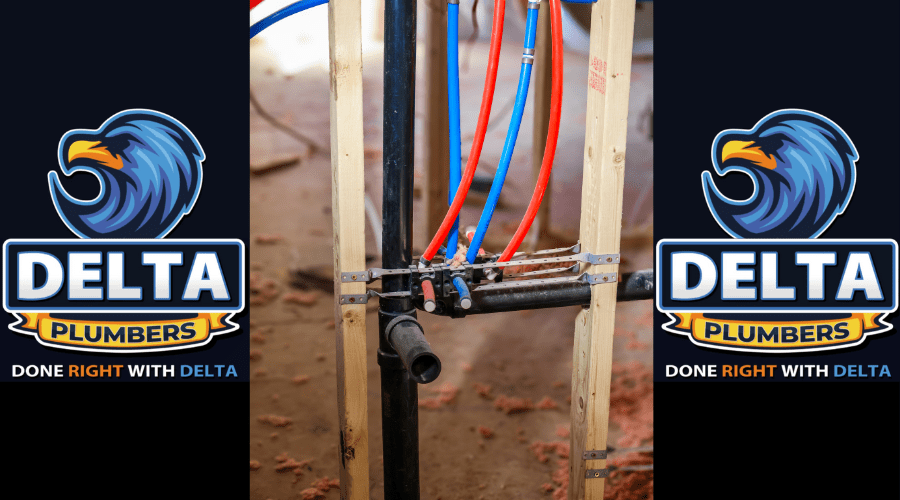
- PEX (cross-linked polyethylene): Flexible, corrosion-resistant, fast to install, and tolerant of freezing than rigid pipe. It uses crimp or expansion fittings and is excellent for whole-home repipes, especially in finished homes where snaking lines through cavities minimizes demolition.
- Copper: Time-tested, rigid, and highly durable. It’s ideal for visible/mechanical rooms and areas with high heat (near water heaters/boilers). It costs more in both material and labour, and installation is slower because it’s rigid and requires more joints. Many homeowners choose a hybrid: copper near the mechanicals and PEX for distribution.
Full replacement vs. partial replacement
- Lead: Best practice is full service-line replacement from the water main to your interior shutoff, plus removal of any interior lead and lead-bearing soldered joints. Partial replacement can disturb scale inside the old line and temporarily increase lead release—so a comprehensive plan is safer.
- Polybutylene: Replace all PB; leaving sections behind creates weak points. A piecemeal approach tends to push the next failure down the line (literally).
What a typical repipe looks like
- Assessment and mapping: The plumber identifies fixture locations, access points, and routing. They’ll note finished areas, ceiling bulkheads, and joist directions to minimize opening walls.
- Permits and protection: Furniture and floors are covered; water is shut off; permits (if required) are posted.
- Demolition (targeted): Access holes are cut at strategic points—often behind sinks, in closets, or at ceiling transitions—to pull new lines.
- Install new main runs: A trunk-and-branch or home-run manifold system is installed, depending on your layout. Isolation valves are added so future repairs don’t require whole-home shutoffs.
- Fixture connections: New supply stubs and valves are set at sinks, toilets, tubs, showers, laundry, and exterior hose bibs.
- Pressure testing: The system is pressurized and checked meticulously for leaks.
- Tie-in and flush: The system is tied into the meter or main valve, flushed to remove debris, and the water heater is brought back online.
- Patching: Small access openings are patched; some plumbing companies coordinate drywall repair, or you can use your finisher/contractor.
Timeline and practicalities
- A small bungalow repipe can be completed in a couple of days; a large two-story home may take several.
- You’ll have intermittent water shutoffs, but good crews stage work to keep downtime minimal.
- If a lead service line is being replaced, exterior digging may be required. Trenchless options exist in some cases; your site conditions dictate the method.
Costs—what drives them
- Access: Finished vs. unfinished walls and ceilings make a big difference.
- Length and complexity: Multiple bathrooms, long runs, and tight chases add labour.
- Material choice: Copper costs more than PEX; mixing materials is common to balance budget and durability.
- Coordination: If you’re already remodelling, adding a repipe can save money because walls are open.
Also Read: How Long Does It Take to Install a New Toilet?

Picture Source – Delta Plumbers
7) Immediate Steps, Testing, and How to Choose the Right Plumber
If you suspect you have lead or polybutylene, you don’t have to panic—but you should make a plan.
Practical steps you can take today
- For potential lead:
- Use only cold water for drinking and cooking (hot water can increase leaching).
- Let the tap run for a short period if water has been sitting in pipes for hours.
- Consider a certified point-of-use filter designed to reduce lead until replacement is complete.
- Arrange a water test to confirm levels before and after any work on your line.
- For confirmed PB:
- Check visible areas for moisture or corrosion at fittings, especially near the water heater and under sinks.
- Lower your water pressure to reduce stress (a plumber can install or adjust a pressure-reducing valve if needed).
- Prioritize replacement in areas with a history of leaks or tight bends.
How to vet a plumbing contractor
- Licensing and insurance: Non-negotiable. Ask for proof.
- Experience with repipes: Replacing a service line or whole-home distribution is different from a simple fixture swap. Ask how often they do this work.
- Material plan: Good contractors explain why they’re recommending PEX, copper, or a mix—and where each will be used.
- Scope clarity: You should receive a detailed proposal showing fixture counts, access points, patching responsibilities, permit handling, and testing.
- References and warranty: Ask for recent repipe references and confirm warranty terms on both materials and labour.
- Communication: Repipes happen in lived-in homes. Crews that protect spaces, stage work neatly, and keep you updated make the process far less stressful.
After the work
- Keep your documentation. It helps with insurance, resale, and future maintenance.
- If a lead service was replaced, flush the system according to your plumber’s instructions and consider a follow-up water test to confirm results.
- Label isolation valves (kitchen, laundry, outside bibs) so you can shut down a single area if needed later.
Conclusion –
Old plumbing can be out of sight, but it shouldn’t be out of mind. Lead pipes pose a health risk you can’t taste or smell. Polybutylene raises the odds of surprise leaks at the worst possible time. Both can complicate insurance, derail home sales, and turn renovations into expensive do-overs.
The good news: once you replace them with modern materials, you’re done. You get safer drinking water, a more reliable plumbing system, and one less worry hidden behind your walls.
If you want a straight, practical plan—what you have, what it will take to replace it, how long you’ll be without water, and how to keep costs reasonable—book a quick inspection. A clear-eyed assessment today is the easiest way to avoid the health, stress, and expense that come with waiting.
Plumbing Services You Can Rely on Across Ontario 🚚🛠️
At Delta Plumbers, we provide top-notch plumbing solutions to residents all over Ontario. From fixing leaks to installing new fixtures, our experienced team is ready to respond quickly. We proudly assist homeowners in:
We also operate in many other cities, including Vaughan, Scarborough, Hamilton, Toronto, Oakville, Kitchener, Markham, London, Kingston, and beyond.
No matter where you live in Ontario, Delta Plumbers is here to deliver fast, friendly, and professional plumbing service.