 Delta Plumbers
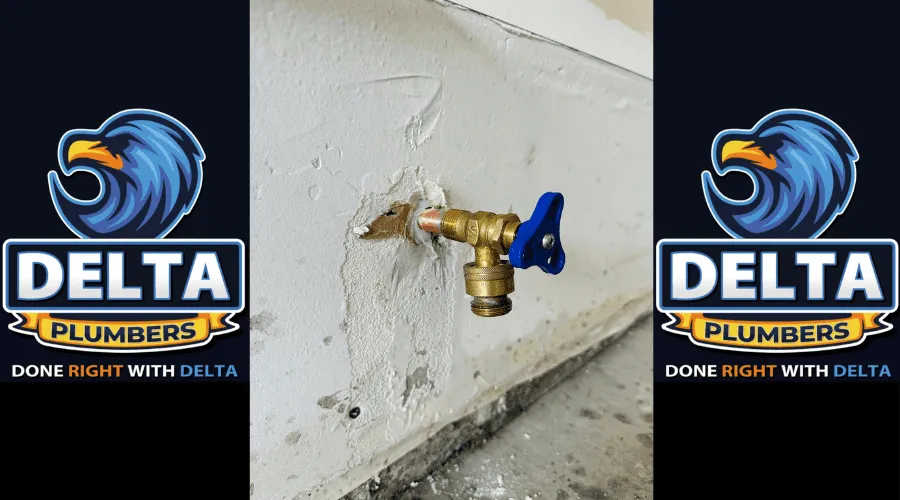
Installing an outdoor hose bib—also called an exterior spigot or faucet—is a task most homeowners will encounter at least once. Whether you’re upgrading an old leaky faucet, installing a frost-free model for Ontario’s freezing winters, or replacing a corroded one entirely, doing it right ensures long-lasting performance, water savings, and safety from backflow and burst pipes.
Hose bibs might seem like minor fixtures, but they connect your home’s plumbing system to the outside world. They power garden hoses, lawn sprinklers, and pressure washers. But if they’re damaged, outdated, or poorly installed, you could face water damage, costly leaks, or even contamination of your indoor water supply.
This guide focuses exclusively on the most searched questions homeowners ask about hose bib installation and replacement. If you’re considering doing it yourself or hiring a plumber, this comprehensive breakdown will help you make informed decisions, understand costs, and avoid common pitfalls.
Picture Source – Delta Plumbers
Do You Have to Shut Off the Water to Change a Hose Bib?
Yes, shutting off the water is a non-negotiable first step when changing a hose bib. If water is not turned off before removal or replacement, you risk pressurized water gushing out once the old spigot is loosened. This isn’t just a mess—it can cause water damage to the siding, the home’s foundation, and even your basement if the wall penetrations are not properly sealed.
In most homes across Ontario, the outdoor faucet is connected to an interior shut-off valve. This valve is usually located in the basement or utility room, close to where the outdoor spigot exits the house. If your house doesn’t have a separate shut-off valve for the outdoor line, you’ll need to turn off the main water supply to the entire home.
Once the water is turned off:
- Open the indoor shut-off valve to drain residual pressure.
- Then, open the outdoor hose bib to release any remaining water.
- Keep a bucket handy in case there’s still some water inside the pipe.
Failing to shut off the water can also make pipe threading or soldering impossible, as residual pressure can interfere with proper sealing. It can also be dangerous if tools slip due to sudden sprays of water.
Additionally, before winter hits, homeowners in colder Ontario regions should always shut off the indoor valve supplying the hose bib and drain the line to avoid freezing and bursting, even if the bib is frost-proof. Turning off the water during installation is essential for both safety and performance.
Also Read: How to Install a Toilet Flange in 8 Steps
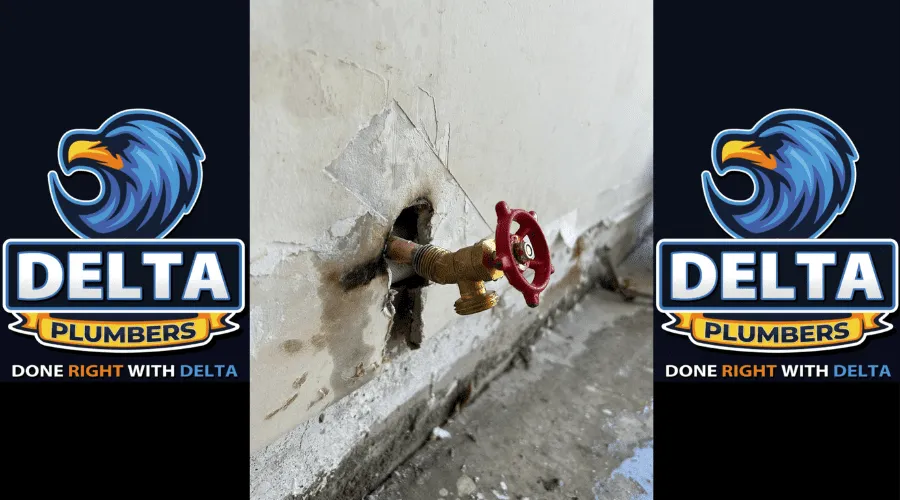
Picture Source – Delta Plumbers
Can I Replace a Hose Bib Myself?
Yes, most homeowners can replace a hose bib themselves, provided they have basic plumbing knowledge, access to the proper tools, and the hose bib connection is easily accessible. If the existing hose bib is threaded onto a pipe, the job is fairly straightforward and requires just a few tools, like an adjustable wrench, Teflon tape, and possibly a pipe wrench for tight fittings.
However, here are the key conditions to consider before starting the job yourself:
1. Type of Pipe Material:
- If your home uses copper, you may need to solder.
- If it’s PEX, you’ll need a crimping or clamping tool.
- PVC requires primer and solvent cement.
- Threaded pipes are the easiest DIY option.
2. Frost-Proof vs. Standard Bib:
Installing a frost-free hose bib might require precise alignment and a slight downward slope to ensure water drains properly. These bibs are longer and reach into the warm part of your home.
3. Wall Structure:
If the hose bib passes through a finished wall, drywall repair might be necessary. A bib mounted on brick siding may require hammer drilling.
4. Special Tools:
- A torch (for copper soldering)
- PEX crimp ring tools
- Thread sealant or Teflon tape
- Drill and mounting brackets for stability
5. Skill Level:
While replacing a threaded spigot can be a 30-minute task, dealing with soldered or concealed connections may take hours and introduce risks like pipe bursts or incorrect sealing.
DIY is recommended only if:
- The pipe is threaded.
- The water supply is shut off.
- You have access to the connection from inside.
- You are comfortable with minor plumbing repairs.
If any of these are a concern—or if this is your first time—you may be better off hiring a licensed plumber to ensure everything complies with local plumbing codes and functions safely.
Also Read: How to Turn Off a Water Heater in 5 Steps
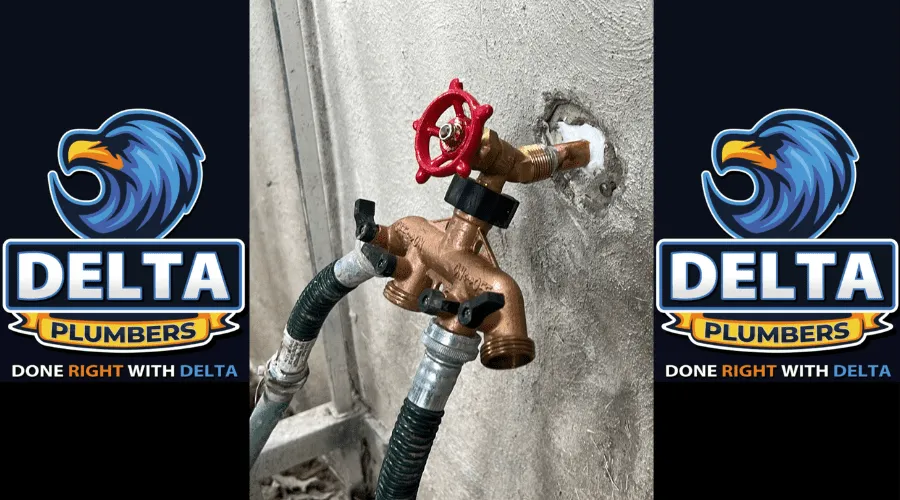
Picture Source – Delta Plumbers
Do You Need a Plumber to Replace an Outdoor Spigot?
You don’t need a plumber to replace a hose bib, but hiring one is often the smartest choice, especially if:
- The existing bib is soldered or connected to PEX.
- The spigot is corroded and difficult to remove.
- You don’t have shut-off access.
- You need to install a new bib from scratch in a different wall location.
A professional plumber ensures:
- Code compliance (especially in cities like Toronto, Mississauga, and Hamilton, where inspections are strict).
- Use of proper fittings, insulation, and backflow protection.
- Correct sloping for frost-free spigots.
- No leaks in concealed wall cavities.
- Protection from potential burst pipes in winter.
Moreover, most plumbers in Ontario will offer a limited warranty on labour and materials, giving you peace of mind.
They’ll also recommend upgrades such as:
- Adding a backflow preventer to protect your water supply.
- Installing a frost-free hose bib for year-round durability.
- Placing a dedicated shut-off valve inside the home for convenience and freeze prevention.
So, while a confident DIYer can replace a spigot, the added safety, time-saving, and guaranteed quality make hiring a plumber a valuable investment, especially when exterior plumbing connects to interior finishes.
Also Read: What Is a Sump Pump, and Do You Need One?
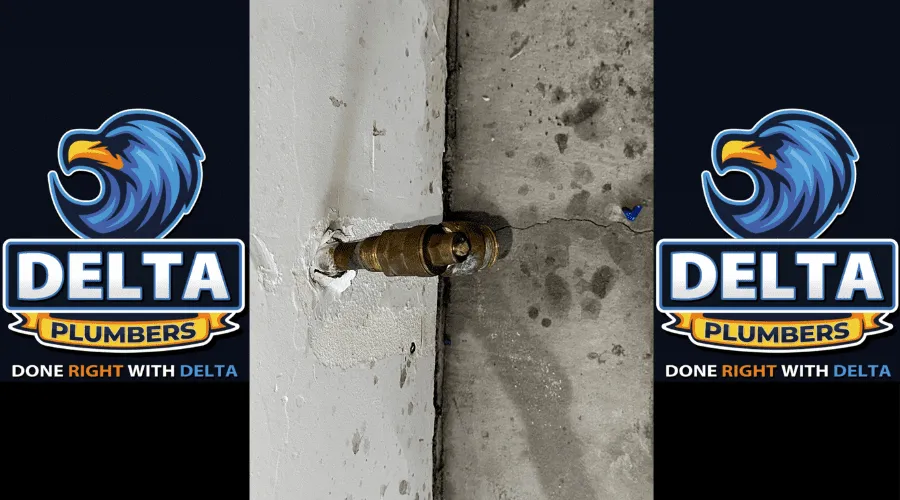
Picture Source – Delta Plumbers
What Is the Difference Between a Hose Bib and an Outdoor Faucet?
The terms hose bib, spigot, and outdoor faucet are often used interchangeably, but they do have nuanced differences in plumbing terminology.
Here’s a breakdown:
- Hose Bib:
A hose bib is the most basic form of an outdoor faucet. It’s a wall-mounted fixture that typically has a threaded nozzle for attaching a garden hose and a wheel or lever-style handle to control water flow. Most homes in Ontario have these near their backyard or garages. - Outdoor Faucet:
This is a broader term that includes all types of water outlets installed outside the house. Outdoor faucets may include:- Hose bibs
- Sillcocks
- Yard hydrants
- Frost-free wall hydrants
- Wall-mounted mixer faucets (for hot/cold supply)
So, technically, all hose bibs are outdoor faucets, but not all outdoor faucets are hose bibs.
- Frost-Free Hose Bibs:
A sub-category of hose bibs, these feature an extended valve shaft that shuts off water deep inside the home, preventing freezing in sub-zero temperatures. They’re ideal for Ontario’s climate. - Sillcock:
This is another word often used for frost-free hose bibs or longer faucets extending from brick or stucco walls.
If you’re buying a replacement or planning a new installation, it’s important to ask for the correct type. For example, a standard hose bib won’t suffice in areas like Ottawa or Barrie, where winter temperatures routinely dip below -10°C. A frost-free sillcock is more suitable.
Also Read: Drain Clearing vs. Drain Cleaning: What’s the Difference and Why It Matters
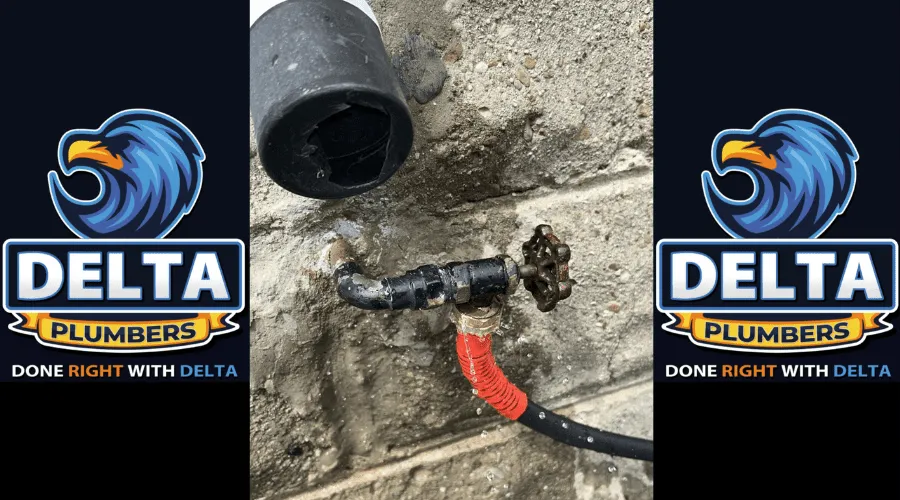
Picture Source – Delta Plumbers
Do I Need a Backflow Preventer on My Hose Bib?
Yes, you do—especially if you’re using your hose for tasks that could create back-siphonage, like:
- Filling a pool
- Using fertilizers or pesticides with a sprayer
- Submerging a hose in a pond or bucket
- Connecting pressure washers
A backflow preventer, often referred to as a vacuum breaker, is a small device that screws onto the hose bib and prevents contaminated water from flowing backward into your clean water supply. It ensures the health and safety of your household water system.
In many municipalities in Ontario, including Vaughan, Aurora, and London, vacuum breakers are required by local plumbing code for new installations or replacements. Even where not required, they are strongly recommended.
Benefits include:
- Protecting against waterborne illnesses
- Preventing fines for non-compliance with building codes
- Reducing insurance liability from contaminated water backflow
They’re also inexpensive—usually under $15—and simple to install. You can:
- Screw it directly onto the spigot.
- Choose a model with a locking feature for added security.
- Opt for versions that drain when disconnected (important in winter).
If you’re unsure whether you already have one, look for a small brass or plastic cap labelled “vacuum breaker” on the spigot. If not, add one immediately—especially if you’re planning a new install or replacement.
Also Read: Why Shower Leaks Happen, and How to Fix Them

Picture Source – Delta Plumbers
How Much Should a Plumber Charge to Replace a Hose Bib?
Pricing for hose bib replacement can vary widely depending on:
- Your location in Ontario
- Accessibility of the plumbing
- Wall type (brick, wood, siding)
- Type of spigot (standard vs frost-free)
- Type of piping (copper, PEX, PVC)
Here’s a breakdown of average pricing in Ontario:
| Job Type | Estimated Cost (CAD) |
| Basic threaded hose bib replacement (easy access) | $100–$150 |
| Frost-free hose bib installation | $150–$250 |
| Replacement with soldering or pipe work | $200–$400 |
| New installation through the finished wall | $300–$500+ |
Additional fees may apply if:
- A shut-off valve needs to be added.
- The interior wall has to be opened or repaired.
- Backflow prevention devices are required.
Pro Tip: Always get 2–3 quotes before hiring a plumber. Ask if their price includes:
- Parts and labour
- Permit costs (if required)
- Backflow preventer
- Warranty
While you may find cheaper rates, be cautious. In Ontario, only licensed plumbers can legally perform certain plumbing tasks under the code. A certified professional will ensure proper slope, sealing, and drainage—all critical in preventing frozen or burst pipes.
Also Read: Why Backwater Valve Installation is Important in Ontario
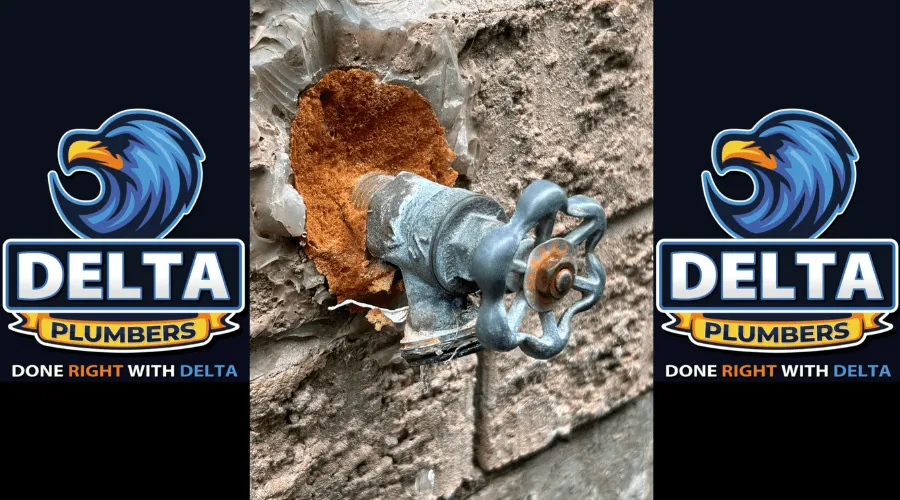
Picture Source – Delta Plumbers
Is a Brass or Stainless-Steel Hose Bib Better?
Both brass and stainless-steel hose bibs have their pros and cons. The best option for you depends on factors like water quality, local climate, and budget.
Brass Hose Bibs
Advantages:
- Most common and readily available.
- Affordable and easy to find in Ontario hardware stores.
- Naturally corrosion-resistant (when lead-free).
- Softer metal, easier to thread or replace.
Disadvantages:
- Can suffer from dezincification if made from low-quality brass.
- May tarnish over time in damp or acidic environments.
Stainless Steel Hose Bibs
Advantages:
- Extremely durable and corrosion-resistant.
- Better for homes near coastal areas or with acidic water.
- Longer lifespan under harsh conditions.
Disadvantages:
- More expensive.
- Harder to find at regular retailers.
- Tougher metal may require stronger tools to install.
For most homeowners in Ontario, a high-quality, lead-free brass hose bib is the best value. Look for CSA-certified models, and avoid older brass bibs that may contain unsafe lead levels.
If you’re dealing with hard water, well water, or coastal conditions, stainless steel may be the smarter long-term investment.
Proudly Serving Ontario’s Top Cities 🚰🔧
Delta Plumbers provides expert hose bib installation and outdoor faucet services throughout Ontario. Whether you’re upgrading to frost-free spigots, adding backflow protection, or installing a brand-new outdoor faucet, our licensed plumbers are here to help in:
We also serve many other surrounding areas. Wherever you are in Ontario, Delta Plumbers ensures reliable service, expert installations, and plumbing systems built to last.